

By Oakleigh Wilson | March 3, 2026
‘ECR Asks’ is a series of Q&A sessions where I speak with experienced researchers to explore their journey in, and perspectives on, open science and transparent research. With the goal of supporting early career researchers like myself, this series aims to answer big questions and share practical insights on navigating the ever evolving landscape of open science and academia.
I would like to thank Alex for his in-depth answers to my many questions. This eye-opening conversation was an inspiring glimpse into the possible future of community-lead publication.
Q&A
One of the biggest challenges in Open Science is ensuring that our research remains both accessible and affordable. Traditional journal publishers often charge authors substantial Article Processing Charges (APC) for Open Access, or place articles behind reader paywalls. Given that much of science is funded through government (and ultimately taxpayer) dollars, it makes little sense for the outputs of this public investment to be monopolised by private publishers or for any financial benefit to flow to private stakeholders. Despite seemingly every researcher balking at this system, it nevertheless persists, and becomes ever more expensive, leaving ECRs like myself asking: “how can we change this?”
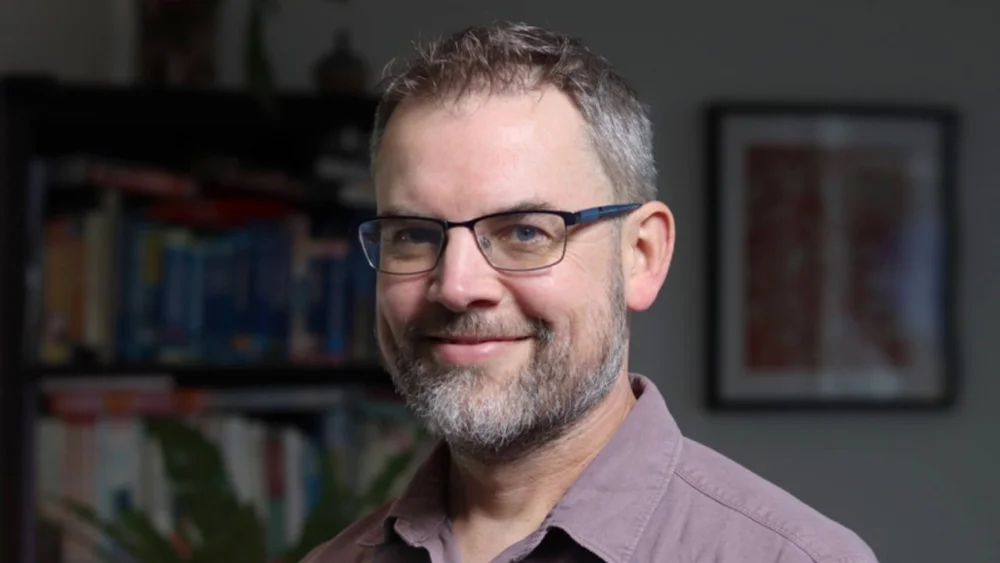
For this edition of ‘ECR Asks’, I spoke with Professor Alex Holcombe, Professor in the School of Psychology at the University of Sydney, Australia. His research focuses on cognitive psychology and visual cognition and he is extensively involved in the Open Science movement. Alex is an associate editor at Meta-psychology, a platinum open access (free to publish and access) journal with a maximum TOP factor (transparency and openness) score; editor at MetaROR, a community-lead open platform for meta-science; editor at WikiJournal of Science, a fully open Wikipedia-integrated journal for supporting wikipedia articles; and has published extensively on the challenges of navigating the existing publishing structure. Alex joined me on October 2nd, 2025 to answer my questions about publishing houses, profit margins, and how to unbundle the journal oligopoly.
This interview has been edited for length and clarity.
The Existing System
ECR: Many researchers are frustrated by the high article processing charges. Why are these costs so high, and how did we arrive at such a dire situation?
AH: To answer this, we can take a simplified economic lens. Other things we pay for, for example groceries, have, in most countries, very thin profit margins because there’s lots of competition for both producing and distributing the food. This competition drives the profit margins down and the prices you pay are not much more than it took to produce the product. However, there are many ways in which this can fall apart. In Australia, there are only two major supermarket chains, and this means they’re able to implicitly collude by avoiding undercutting each other’s prices. It’s in both of their interests to not drive the price down, and so they both benefit, and their margins go up. It takes some new entrants to come in, like Aldi (which will be incentivised to provide a much lower price) for competition to return to the system.
Journals are currently dominating the academic research market and prices aren’t coming down because articles are not the right kind of commodity. With food, it works, because you can physically go and see that the apple at this new upstart grocery store is just as good as the apple at the existing ones. With journals, however, people are not judging the quality of the journal in terms of anything that makes rational sense. We are not judging based on the processes the journal is following, how good their editorial processes are, how quickly they get back to us, or the quality of their peer reviewer system. Instead, we got trapped in this inertial legacy system, where the way we decide the best journal is by whichever one the best researchers of the previous generation had been submitting to the most. “Impact Factor” is just a product of history. Journals benefit from the first-mover advantage, where once the best research happens to be submitted to this journal, because it was the first one in the field, then it just stays like that forever, unless there’s some unlikely disruption. You can’t come in with a new upstart journal because the only metric we care about is the impact factor, which you cannot manufacture without time and momentum. Journals benefit from this positive feedback loop and have no incentive to improve their processes, or reduce their costs.
ECR: How can we break this wheel? Who is in the position to return competition to this system?
AH: Ask any researcher who they’re going to listen to and it’s going to be their funders. However, public funders are generally hesitant to flip on this system. Previously, the public and government funders, even if they did recognise the issue, didn’t have the leadership and courage to push back; maybe because they are beholden to a broader demographic, maybe because they are a stilted bureaucracy. Private funders, sometimes backed by billionaires who are famous for just acting without consultation, have sometimes supported this movement more than government funders. For example, the Arcadia Fund and Howard Hughes Medical Institute require that every funding recipient has to publish preprints, and publish open access.
Professional societies aren’t particularly interested in toppling the ridiculous amount of profits either. Unfortunately many professional research societies have become dependent on their journal’s revenue. Even if the professional society is only making a small profit margin compared to, say, Elsevier’s 30-something percent, that’s still a lot of money, which they are not incentivised to change.
Another player is the universities. University rankings buy into the existing journal system wholeheartedly and every university vice chancellor is trying to increase their university ranking by boosting metrics such as published journal prestige. We’re in this sort of corporatised university system where bean counters decide how the resources get distributed, and, ultimately, they need beans to count… That being said, over the last decade, there has been a gradual improvement in policies to prioritise qualities of research beyond just impact factor and journal prestige. Europe has shown particular leadership here. In Europe, universities have better funding and are not as dependent on those ranking systems so they can afford to refuse to play the corporation-controlled rankings game and voluntarily withdraw themselves.
At the level of the individual researcher, most are not paying attention to the economics of the publication system, they’re just interested in doing their science. We do actually need activism by researchers, though. Thanks to social media it has become easier to communicate across disciplines and connect a critical mass of people to campaign about it. The rise of preprint servers took almost everybody by surprise. Preprint servers are a community lead project that may have been started for other reasons but did actually take away some of the research monopoly of the publishers. EcoEvoRxiv, for example, is run by SORTEE. We can build on that. We can think about taking away other aspects of the corporation’s monopoly or oligopoly.
In short, this is a collective action problem. It’s game theory. Currently we are incentivised to just work with the existing system because you can’t change it independently, you can only change it when everyone agrees to change together. For so long, we have tried to change the existing system by forcing publishers to do something else, but they have many more lobbyists and lawyers than anyone else… Instead, we may just have to run around the old system entirely.
Unbundling of the Journals
ECR: When I first learned about the current publishing system, I thought: “I’ll simply just become an editor-in-chief, and I’ll just change the system!” Obviously, however, everyone’s had that idea already…
AH: Well, some editor-in-chief have made a stand, but it’s not easy. There have been cases where an entire editorial board has resigned together. They publicise that this particular journal is blacklisted and encourage the entire community to back their new free journal. It’s worked several times but only when there is strong leadership and an existing community.
ECR: How much does it cost to run a publishing house? What are the costs of — hypothetically — SORTEE starting, for example, our own Diamond Access journal?
AH: That’s a great question. Essentially, you can run a journal completely for free, but it depends on what level of service you want.
You need a journal management system, like Manuscript Central or Scholar One, for which there are a few open source options. The most popular one is Open Journal Systems, which is free and well-known enough to be user-friendly. There will be maintenance issues, but a knowledgeable tech or IT person should be able to manage this inexpensively.
Then there was the question of whether you want your papers to be beautiful, well-laid-out documents. Whether you want authors to be able to just submit a Word document, and then get someone else to arrange all the figures and tables, maintain the house style, and link the references to the DOIs. The main publishers usually pay for someone in India to do basically almost all of that. But if you’re happy to just have the author generate a PDF, or work with the authors to make stylistic modifications, then that’s free (though more time consuming for the scholars).
Major journals tend to have paid employees that keep things going. If you don’t have money to pay an assistant (who would, for example, chase manuscripts that get lost in the system), it’s a lot of work for the editors. The chief editors themselves in major scientific journals might receive between 15- and 30-thousand U.S. dollars or more per year, and typically the associate editors receive a few thousand. Starting your own journal, you might not have the funds to pay for this. But we’re counting on people having a passion for open science, not money.
ECR: Would it be possible to do away with the journal system entirely? Could there be a different model altogether based on the existing preprint servers, where we have open-source peer review and commentary and then the most popular reads of the month are “published”?
AH: It’s weird that journals don’t operate like this when it’s the way the rest of the media ecosystem already works, right?
To unbundle the journal publishing system we need dissemination — which we have through the preprint servers — peer review — for which there are already public forums appearing — and then what they call curation. Given the firehose of research that’s coming out, we need some way to highlight more interesting and higher quality papers. Journals do this by accepting vs rejecting articles.
ArXiv is the oldest preprint server and we are starting to see people building additional functionality on top of it. For example, AlphaXiv allows for filtering, tagging, commenting, and ‘liking’ — allowing you to compile a feed of popular and recommended papers, similar to social media. Similarly, the Center for Open Science had a little button on every preprint page where you can ‘endorse’ a paper, essentially to recommend it. So far, I haven’t seen any of these crowd-sourced interest-factor approaches fully succeed.
There have been more structured approaches too, though. In metascience, for example, there was no ‘Journal of Meta-science’ or equivalent, so we metascientists started MetaROR, which stands for Meta-research Open Review. We only take submissions of preprints. You provide a link to your preprint on the server, and we, just like a normal journal, ask various people to review it, and then we publish the reviews. For the curation (that is, collecting relevant articles together) aspect, we write an editorial summary of the reviews and why it’s of interest. eLife has taken another approach. They were a traditional open-access journal but then they moved more to this publish, review, curate system. They use ranked adjectives to describe the research, for example, ‘groundbreaking’ or ‘landmark’. But this system is new and we’re still figuring out how to best do it.
Paying Peer Reviewers
ECR: An often-stated solution to the delays and overwhelm facing the peer review system would be to use some of the APC to pay peer reviewers for their time. Are there any hidden limitations that I’m not taking into account when I think that we should probably pay peer reviewers?
AH: If you take the current system as a given, then yes, paying peer reviewers would be a marginal improvement. However, whenever you introduce money into a system or transaction where it wasn’t present before, that creates an incentive that may result in various distortions. It becomes an economic transaction rather than a service you’re doing for the community. It’s amazing that the free peer review system has lasted for hundreds of years without completely collapsing. There’s got to be some elements in there that we want to preserve, and we should be wary of potentially sullying it with money.
However, this whole idea misses the bigger picture that there simply shouldn’t be this much money in the system at all. My hope is that we switch to the shoestring system. So, no, there won’t be money to pay reviewers, but nor will there be any of the other costs.
ECRs Against APCs
ECR: As an ECR without a lot of money, when I’m choosing to publish my papers, I can either go open access and cough up my small amount of funding that I’ve been able to accrue or I can just go closed access and then put it on a preprint server. Is this an acceptable step-around? What else can we do to not become complicit in this system?
AH: It shouldn’t be up to the young researchers. It should be the senior researchers taking leadership here because their career is not as precarious. However, we have this weird multi-generational problem in academia where even almost all the papers that I or other senior people write have some ECR as, often, the first author. While, as a single author, I’ll never publish with Elsevier, I can’t impose that on the ECR, who doesn’t have a job yet — so, they really have us trapped.
Unfortunately, many senior researchers are so used to the current system, they’re not as outraged by it anymore, or gave up trying to change it. An opening for ECRs is to bring their passion and time. Spread the word by talking to your supervisors and co-authors. Join organisations of motivated people, like SORTEE. Volunteer with community lead projects, especially, non-corporate conferences. Just do whatever you can to support the community of scholars. Overcoming the forces I’ve described requires organising, and historically, many solutions have come from scholars themselves, working together.