
By Oakleigh Wilson | April 6, 2026
‘ECR Asks’ is a series of Q&A sessions where I speak with experienced researchers to explore their journey in, and perspectives on, open science and transparent research. With the goal of supporting early career researchers like myself, this series aims to answer big questions and share practical insights on navigating the ever evolving landscape of open science and academia.
I would like to thank Cecilia for her time, and the inspiring, passionate energy she brought to our conversation.
Q&A
The “meta” of metascience encompasses not only research practices but also how scientists organise, communicate, and collaborate in pursuit of their shared goals. Consequently, SORTEE’s mission of Open Science extends to these social elements too. In the same way we seek to continuously improve scientific methods, we can be constantly refining and optimising how we coordinate ourselves.
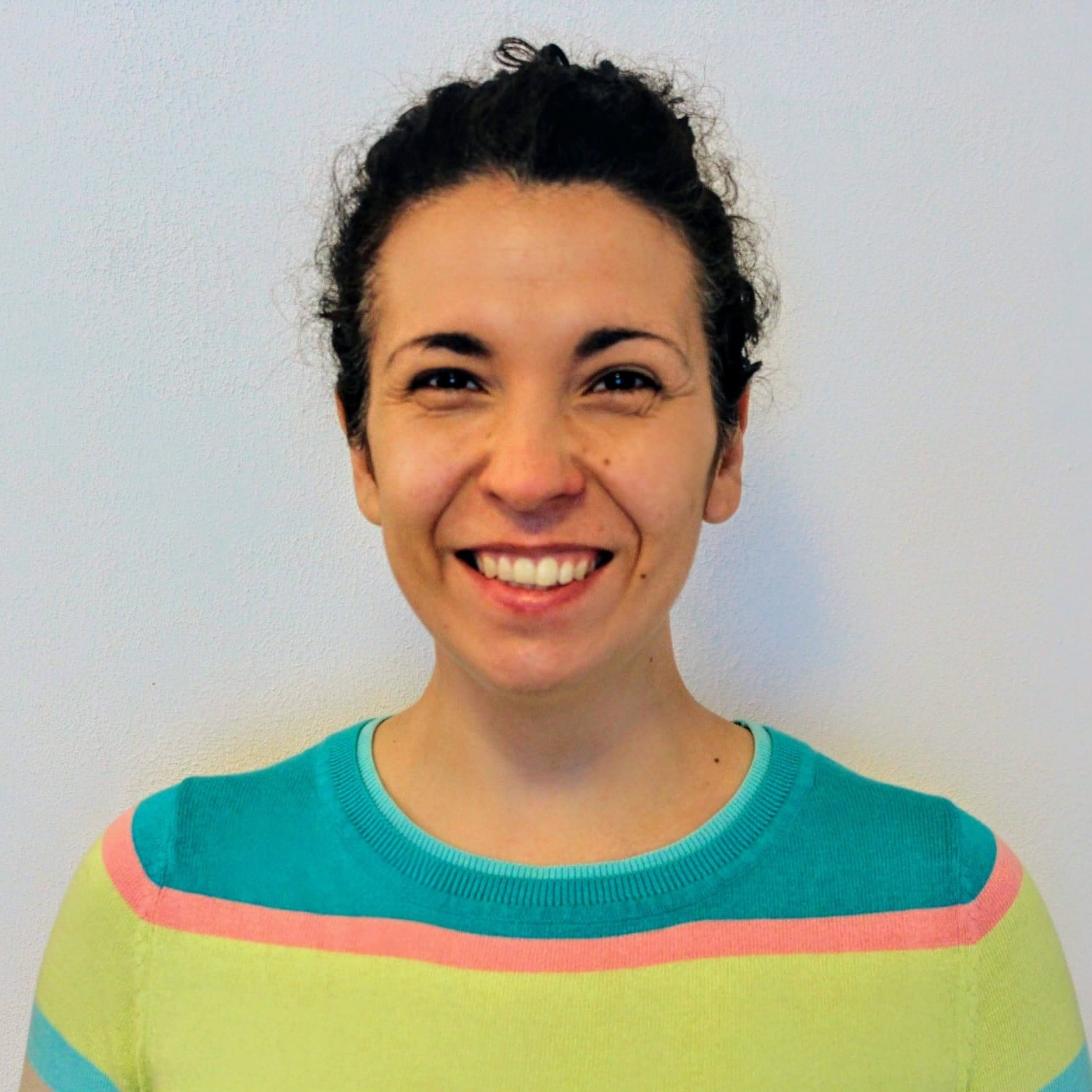
For this edition of ‘ECR Asks’, I spoke with Dr Cecilia Baldoni, Postdoctoral Researcher at the Max Planck Institute of Animal Behaviour, Germany. Her academic research focuses on cognitive trade-offs and brain size plasticity in shrews, while her broader work engages with the Open Science movement, particularly in fostering community connections and developing automated, practical research workflows. Cecilia serves as an Open Science Ambassador in the Max Planck Society and Data Editor for PCI Ecology. As well as being an active contributor to R-Ladies and The Turing Way, she co-led SORTEE’s Code Club last year and is currently serving as Community Manager for SORTEE’s Member Engagement committee. Cecilia joined me on February 13th to answer my questions about community engagement and opening up open science.
This interview has been edited for length and clarity.
Engaging and Communicating with Scientists
ECR: In which ways is community engagement with scientists different to engagement with, for example, the lay public?
CB: Community engagement with the public and for industry is often more like client engagement; gathering feedback on, for example, the user experience with their product or a system. It’s very structured and intended to gather information that will benefit the industry. Engaging scientists is a bit different, much more passion oriented. When engaging with academics, it helps to be an academic yourself, or at least have insight into the academic world. I’ve been a scientist for the past 10 years-ish and I know how scientists think, the language they use, and their struggles, because it’s the same situation I’m in. Researchers are often caught up in the challenge of their own work, constrained by time and energy. All the scientists I know work over hours, work over weekends, work more than they should. When scientists are interested in something, they’re very enthusiastic — often the most enthusiastic! — about learning and improving things. For instance, everyone working with SORTEE is here because they really care about open science and changing the system. They’re very driven and they really give a lot of their free time to contribute to the society’s mission.
ECR: Other than time, which you mentioned, in your experience, what are some of the biggest barriers to engaging scientists?
CB: Probably communication. How do I get in contact with people quickly? I remember trying to contact someone through Slack and being told “scientists don’t use Slack”. I thought, wait, but I’m a scientist, and I’m using Slack. What are other people using? Email can sometimes be too formal, plus, it’s inefficient for short back-and-forth messaging, and can get very complicated when there are many people in the chain. Something more direct, like Whatsapp, however, might be too informal, and it makes it hard to separate work and life — I don’t want to bother people with my work thoughts at 2am. As it turns out, everyone has their own preferences anyway. I have different ways of communicating with different team members, so I constantly have to remember which of the half-dozen or so possible platforms and channels I last spoke to someone on, which is a lot of mental load and makes connecting with each other more complicated than it should be.
That being said, I think we are doing the best we can with what we have. SORTEE, for example, is a huge community of more than 800 members. At this size, yes, it is a bit difficult to reach the right person with the right information, especially when it’s time-sensitive, but for everything else, our size is our strength. It’s amazing that there are so many people that can be engaged and who want to participate. If we could somehow open the communication to capitalise on this community resource and crowd-source more solutions, then I think that would be perfect.
For example, in other societies I’m a part of, we manage most things on Github by making pull requests, leaving comments, and pinging each other. It’s all open, it’s all accessible to anyone who wants to see it, or wants to contribute. It’s not behind a pay- or society-membership- wall. Sometimes there are concerns that not everything needs to be seen publicly, and that’s true, but just because something is public doesn’t mean it’s necessarily going to be accessed. In my experience, the only people reading through the pull request logs are those who are interested in helping with the project, anyway. By making it open, it’s more accessible to those interested people. This is particularly helpful if someone doesn’t want to join a committee necessarily, they just want to help on one project, or just for a week. If everything is open, they can do that.
Besides, isn’t the whole point to make it open? SORTEE is a society for open and transparent research, it would make sense if the decisions we made, and the projects we worked on, were open and transparent too instead of buried in closed Slack channels.
ECR: Maybe it’s not surprising that small groups end up working semi-independently in their silos, because it’s often easier to just do things yourself. A project that has too few people working on it isn’t inclusive and misses out on the benefits of community, but a project that’s too big becomes bureaucratic and bogged down in emails and meetings. How do we decide on the right amount of people to include for a project?
CB: How many people do you need to change a lightbulb? It depends on so many different factors. There are some projects that require particular permissions and particular skills that will necessarily be open to only the people with those skills, however, in most cases, there are little downsides to making it as open as possible. In the ideal case, we would open every project to everyone.
We could run into the issue where if everybody is responsible, nobody is, but, in my experience, that is a much rarer problem than the issue of not having enough people to help. If the overhead you’re worried about is too much lag in the back-and-forth communication, that’s more of a challenge with the communication system than with the number of people.
Basically, if you want to make projects that last, the teams need to be bigger than just the people who founded them. You can’t always rely on the project founders because, at some point — hopefully — the project will outlast them. In the same way we at SORTEE recommend researchers make their data robust and usable in 30 years, we should be designing our society to last.
The Turing Way
ECR: On your website you reference your work on the Turing Way book. What is the Turing Way, what is the book, and how did you get involved?
CB: The Turing Way is an open science, open collaboration, and community-driven project. It’s all about open science, more broadly than just in academia. Until last year it was linked to the Alan Turing Institute but now it’s an independent body. The Turing Way isn’t a “society” but a community of practice, and it’s a very active and diverse community made up of academics, data scientists, data managers, software engineers, developers, communicators, policymakers, and more. The Turing Way book is a guide to open science, collating everyone’s knowledge about reproducible research, covering everything from reproducible code, to communication, to outreach and collaboration. Anyone can contribute to the book, and anyone can use it — as long as they cite the book, they can use any of the many materials.
At first, I was just passively reading the book for about 2 years. Eventually I started sharing very small things and making very small changes. For example, someone mentioned that there were some images without captions and I thought “yeah, that sounds like something that’s on my skill level” and so I jumped in. The Turing Way runs open seminars and tutorials called a “book dash” (kind of like a hackathon) where they teach people how to make changes to the book. It’s very easy to get involved in and the community is lovely and very welcoming — I recommend it!