

By Oakleigh Wilson | May 19, 2026
‘ECR Asks’ is a series of Q&A sessions where I speak with experienced researchers to explore their journey in, and perspectives on, open science and transparent research. With the goal of supporting early career researchers like myself, this series aims to answer big questions and share practical insights on navigating the ever evolving landscape of open science and academia.
I would like to sincerely thank Tim for sharing his unique perspective on a controversial and often un-acknowledged element of science.
Q&A
While we at SORTEE mostly focus on the systematic and external challenges in open science, a little discussed limitation is the fundamental humanity of those doing the research. At the end of the day, scientists are only human, and are subject to the same pressures and weaknesses as all professions. Like all professions, occasionally someone will be incentivised to cheat the system and, occasionally, they will take the opportunity to do so. How the remainder of the scientific community chooses to respond to this misconduct defines our community culture.
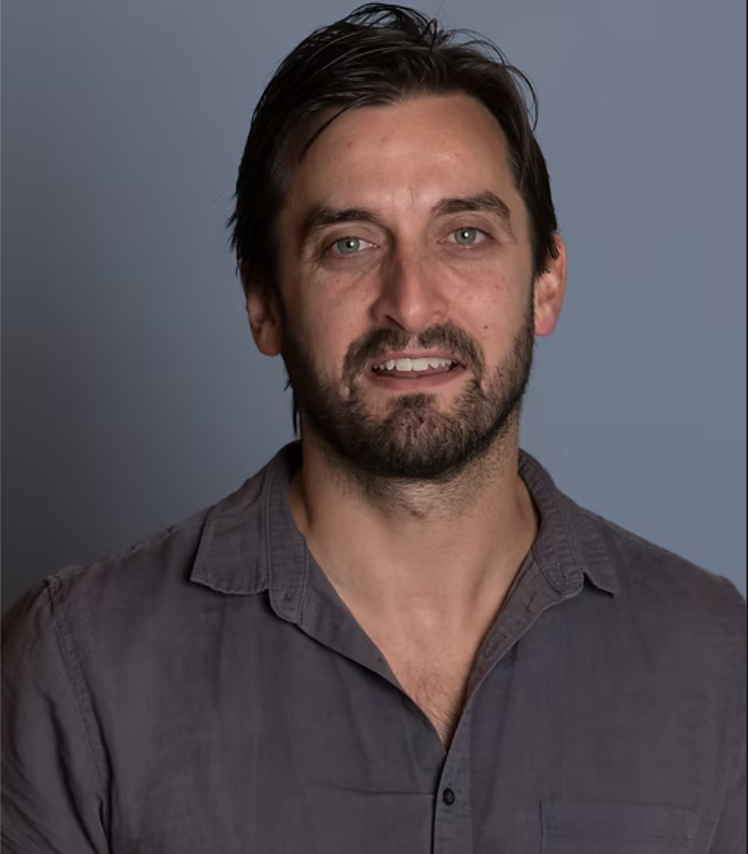
For this edition of ‘ECR Asks’, I spoke with Professor Timothy Clark, Professor at the Marine Research and Innovation Centre of Deakin University, Australia. His research primarily focuses on fish eco-physiology in the face of climate change but he has also served as whistleblower in several investigations of scientific fraud, as well as written about the importance of acknowledging scientific misconduct. Tim joined me on February 24th, 2026, to share his perspective on the necessary awkward conversations about data fabrication in science.
This interview has been edited for length and clarity.
Data Fabrication: What, How, and Why?
ECR: I have not really heard much discussion of data fabrication in science. Is it very rare, or just not talked about?
TC: It isn’t discussed frequently. Honest scientists seem to find it impossible to believe that it’s happening, and tend to turn a bit of a blind eye to it, not because they’re doing anything wrong themselves, but because they just don’t want any involvement in it.
It is rare, but even though it’s only a small minority of researchers that are committing misconduct, the impact is disproportionate because you’re not gonna make up blasé data… You’re going to make up really cool stuff, which is going to get into the big journals, and secure funding and accolades. Which, of course, takes all the resources away from everybody else who’s doing the right thing.
ECR: In your 2016 Trends in Ecology and Evolution publication Scientific Misconduct: The Elephant in the Lab, you present the idea that deliberate dishonesty is a bigger challenge in the life sciences than is traditionally thought, with one paper suggesting that 14% of researchers had direct knowledge of fraud. When we talk about “fraud”, “scientific misconduct”, and “falsification”, here, what are we including and what does this generally look like? Does it tend to be complete fabrication, an omission, over-exaggeration, covered-up mistakes, or is it more grey and nuanced in each unique case?
TC: There certainly are the obvious nefarious activities such as complete fabrication of datasets where no real experiments were conducted. For example, just within the fields of ecology and evolution, there’s been Jonathan Pruitt, Oona Lönnstedt, and other suspected cases with fabrication and manipulation of data. We also frequently tend to see image manipulation, where images are doctored to present something misleading. Elizabeth Bik has made a career out of detecting these misleading images, estimating that up to 4% of papers include manipulated or duplicated images.
Then, as Tim Parker has written a lot about, there are a lot of grey areas where things have been allowed, even though they’re not up to standard. For example, measuring 15 different parameters and only reporting the one that was significant with the treatment without correcting for multiple comparisons. While this may not be actively nefarious, these grey areas are also detrimental to advancing science, because we can’t quite believe a lot of what we’re seeing in the literature.
Similarly, because biology is so variable, it can be really easy to come up with a biological explanation for some miraculous phenomenon you’ve “discovered”. 9.9 times out of 10, though, there is a methodological or analytical mistake along the way that has generated the artifact, but scientists are too often looking to make an incredible story about their results without properly interrogating them first. In some areas, e.g., mathematics and physics, results are often either right or wrong. In biology, we have so many degrees of freedom, we can often explain things away by saying — for example, if nothing has been found on this exact topic, even in the same species — “oh it must be a population effect”… even when it’s a fundamental physiological process that absolutely would not be dependent on the population. When we’re too eager to sell a big story, we stop being rigorous.
Everybody makes mistakes though and it’s important for me to note that mistakes don’t constitute scientific misconduct. Especially when you’re learning, these things will happen. Nobody loves having to write a correction for a paper that they’ve published, but that’s the way science works. You’ve got to just fess up to it and do something about it. Frequently people misinterpret our work of exposing fraud as us looking over the shoulder of everybody and criticising everything. That is absolutely not where this started, and it’s not where it’s headed, and it’s never been the case.
ECR: In that same paper, you summarise that “the current reward system selects for poor quality research by incentivising practices that favour sensationalism over quality”. I presume this is largely due to the publish-or-perish environment of academia and journal editors pushing for more “exciting” research, but is there more to the story here? Scientists are, after all, only human, and some humans do lie… Does your experience suggest fabrication is predominantly due to a structural issue in the incentives of academia, or is this more a reflection of fundamental human nature and fallibility?
TC: I think that there’s a bit of both. In every occupation, there are incentives to do things that are not not right. For example, a mechanic that charges for a service they didn’t really perform makes more profit. However, in that case, there’s a method for detecting business fraud and repercussions for the individual that’s cheating: Google reviews will oust them and they’ll lose business. In science, we don’t really have checks and balances like that.
The way science is conducted and reported hasn’t really kept pace with modernisation of the world. Science is still very much an honesty system. The thinking is that we’re all trying to contribute to the greater good of understanding the world, so why would anyone make stuff up? Of course, the reality is that there are a lot of PhD graduates and hardly any academic positions. The academic positions go to the graduates with the grant funding and accolades, and those go to the ones with the top papers… So there is absolutely an incentive to make stuff up, if it helps you get that top paper.
But no matter how many incentives there might be, there’s no excuse. Cheating the system for your own benefit is just unfair to everybody else who’s working very hard to accomplish their goals.
Whistleblowing
ECR: Throughout your career you have been involved in whistle-blowing multiple high-profile fraud cases. Can you tell me a little about the process of whistleblowing? What was your experience talking to the journal and university?
TC: In short, in my experience, whistleblowing is not fun, it’s always full of frustration, and there’s no personal benefit to it whatsoever.
When my collaborators and I came across our first case of data fabrication, we thought we would just present it to the university and the journals, and they would say, “thank you very much”. Instead, what we found is that no one is interested in exposing fraud. There are big conflicts of interest and incentives to cover it all up. If you’re a journal and there’s a high-profile paper attracting lots of media attention and citations, are you going to pull that paper just because somebody says there’s something wrong with it? Probably not. The universities don’t want the bad publicity either. As I said, no one is fabricating data for a paper in a low-ranking journal; you do it for a paper in Science or Nature, for big grants, for work at a high profile university. This research is probably making a lot of money for the university, and so the university is going to back the accused researcher on reflex, and sweep it under the carpet.
Thankfully, in our first whistleblowing case, Sweden had an independent central ethical review board, which took our complaint seriously after the university didn’t, and conducted their own investigation which verified our allegations of fraud. Without that body, I’m not sure if anything would have happened… This is why I, along with many others, have been advocating for a similar centralised, independent, scientific, ethical review board in Australia. Scientists are already stretched thin helping the scientific discipline. To really address fraud, the members of this review committee would be paid for their time. The panel would be federally funded, with no conflict of interest links to universities or journals or other grant funding organisations. Without that independent body, the complaints can be ignored for years.
ECR: This whistleblowing also seems to have generated significant controversy within the scientific community more broadly. A quote that stood out to me was someone stating: “If such a controversy gets outside of the community, it’s harmful because the whole community loses credibility.” But doesn’t not investigating fraud also cause the community to lose credibility? How did you trade off against these two competing ideas when deciding whether to investigate?
TC: My biggest regret about the whistleblowing that we’ve done is the negative response from a surprising number of scientists around the world, including people who I considered friends and close colleagues. People are so reluctant to talk about and acknowledge fraud, they would prefer to detach rather than actually have a conversation about it.
Scientists in general are seeing a decline in public trust, and that has come about partially from revelations of fraud in lots of different disciplines. It seems the approach a lot of scientists would advocate for is that we should be just keeping all of these things to ourselves, and not letting it get out to the public. But that’s such an odd way of going about things. When these fraud cases do ultimately get out to the public, any attempts from the scientific community to cover up the misconduct will be seen as much worse than if we were actively policing and regulating our own community. Whistleblowing is a lot harder than it should be, but when we do see outcomes, that’s an indication that we are attempting to clean up our own mess and show integrity.
Stopping Fraud
ECR: One of the differences your replication study implemented was automated tracking of the fish behaviour as opposed to human observation, preventing the subjective bias of the researcher from influencing the data. Another recommendation has been to film all experiments and upload the footage as the raw data associated with each publication (rather than just the summarised observations). Do you have any other recommendations for how early career researchers can fool-proof their own work against mistakes and biases?
TC: With the ocean acidification replication paper, my original intention had been to blind everything but, since we were working with a small team at a small field station, that proved impossible. For example, the person running the experiments could hear the solenoid firing the CO2, which gave away that it was a CO2 treatment group rather than a control. Instead, we decided we were just going to video everything. Being as transparent as possible is the best solution. If you have nothing to hide, then recording everything should be no problem.
ECR: I understand that when you began working with students/ECRs of the researchers involved in one of the misconduct investigations, some had already independently questioned the work but were “afraid of retaliation” if they were to speak up. If you were an ECR in a lab where you suspected some kind of intentional or unintentional fraud or misconduct, what would the best course of action to take be?
TC: In that case, some of the lab members reached out to us because of our previous role in the Lönnstedt case. The first thing I would say is that being a whistleblower is incredibly time-consuming and should absolutely not be done alone. Find trusted people to support you and work with you, through the process. You need subject-matter experts, and, preferably, someone with experience handling these kinds of complaints. Compile the evidence in a really clear, concise, and organised manner, and provide a cover letter which steps through, point-wise, the narrative of what’s happened and how we’ve got to this point, referring to specific items of evidence. You need to really hand it to the investigatory board on a platter.
ECR: Who’s responsible for catching fraud in science? I’m guessing your answer is going to be “everyone”.
TC: Yes, everyone. Almost everyone has an example of a paper, or a part of their field, they personally believe isn’t true and yet, nothing ever gets said about it, and those papers remain in the literature forever. Good senior researchers will know to ignore that research but the people who don’t yet know it’s rubbish are the students and the ECRs.
I’d hate to think how many PhDs have spent three or more years trying to replicate things that were made up in the first place because their main PhD project was to try and replicate some really cool, but fraudulent, phenomenon…