

By Oakleigh Wilson | June 23, 2026
‘ECR Asks’ is a series of Q&A sessions where I speak with experienced researchers to explore their journey in, and perspectives on, open science and transparent research. With the goal of supporting early career researchers like myself, this series aims to answer big questions and share practical insights on navigating the ever evolving landscape of open science and academia.
I would like to thank Angela for her passion and generously sharing her time to speak with me on this topic.
Background
The progression of research relies on the generosity of individual academics volunteering their time to review each other’s research through the peer review process. Coined the “1 billion dollar donation”, these unpaid, and predominantly anonymous, contributions have formed the backbone of academia. More recently, however, this system is being stretched increasingly thin, and risks overwhelm. With the volume of submitted papers exponentially increasing, and academic lives becoming ever busier, fewer and fewer researchers are volunteering to peer review. Thus, the burden of peer review becomes too much for the remaining pool of reviewers, timelines lag significantly, and the system threatens collapse.
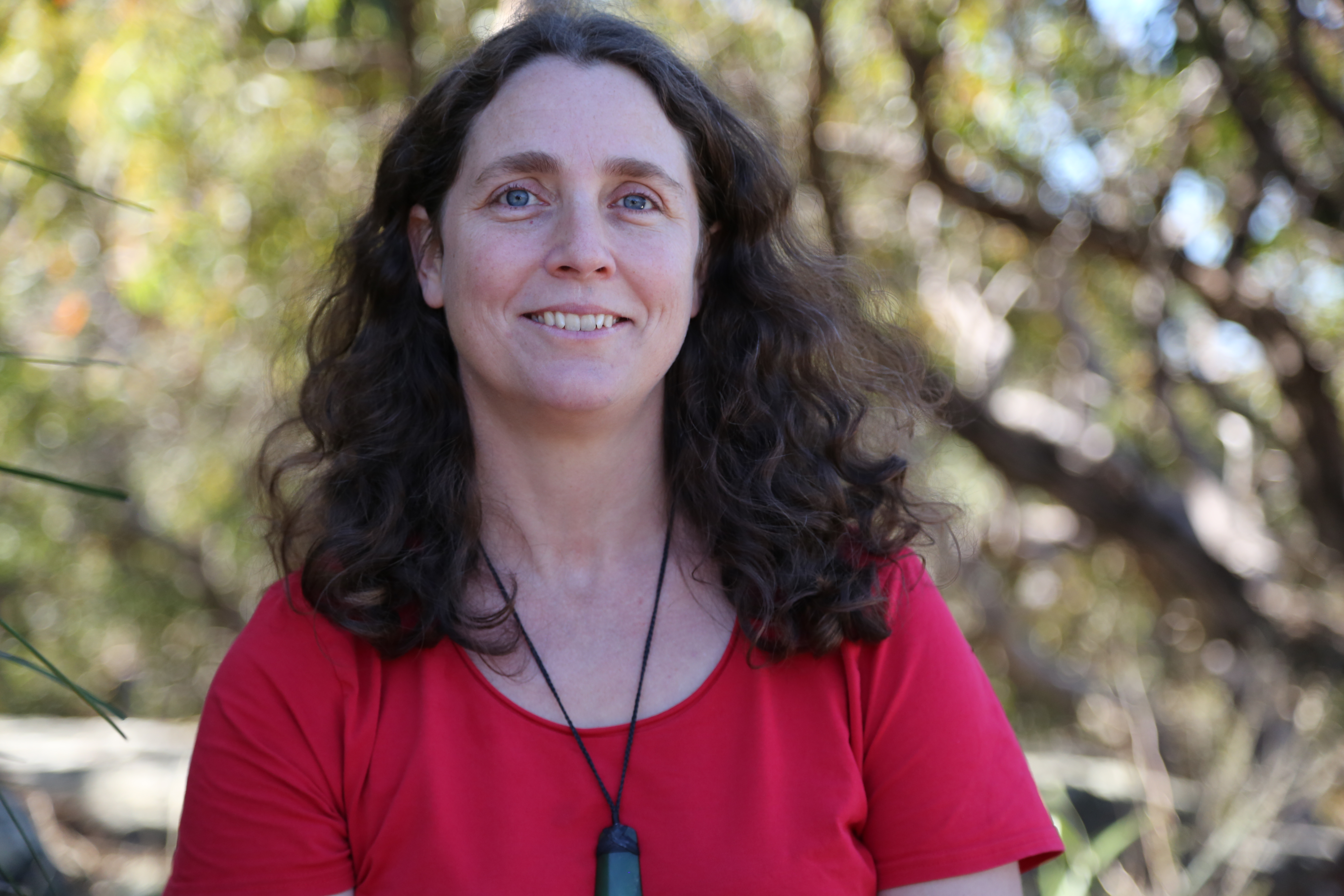
For this edition of ‘ECR Asks’, I spoke with Professor Angela Moles, Professor at the Evolution & Ecology Research Centre of UNSW Sydney, Australia. Her research broadly explores how different environmental conditions affect the way plants grow, reproduce, and interact with other organisms, and she serves on multiple scientific committees, including the NSW Threatened Species Scientific Committee and Australian Flora Foundation Council and Scientific Committee, and is Director- Inspiring Ecology Teaching for the Ecological Society of Australia. Recently, she led a paper, ‘A transparent universal credit system to incentivize peer review’, on improving the fairness and sustainability of the current academic peer review system.
This proposed system, called “Peer review by reciprocity” recommends paying peer reviews for their reviews, not with money, but with ‘credits’, which are then redeemed to submit a paper of their own. Each review of sufficient standard (as assessed by the handling editor) would earn a single credit, with each paper submission requiring 2 credits contributed from the authorship team. Waivers would exist for exceptional circumstances, such as first-time authors, or high urgency publications, but otherwise, this system would incentivise publishing authors to pull their weight in the reviewing community and share the peer review burden.
Angela joined me on May 22th, 2026, to discuss her experiences with peer review and the proposed Reciprocity credit system.
This interview has been edited for length and clarity.
Q&A
Non-Contributors in peer review
ECR: In your opinion, what is the approximate proportion of reviewers to non-reviewers in the scientific peer review community, and why aren’t the free-riders peer reviewing — is it really just time constraints, or is there more to it?
AM: While I’m not sure of what the stats are exactly, journal editors often have to ask probably about 30 people before they can secure reviewers.
I think a big part of the problem is just how busy academics are nowadays. The demands on academics have increased so much that I don’t think most of us even have time to be thinking deeply anymore, let alone reviewing. While early career researchers benefit a lot from peer reviewing (e.g., exposure to new ideas, meta-learning about scientific communication), I must have reviewed several hundred papers by now, and my marginal benefit of how much I learn from reviewing each one is now quite small. Would I be better off spending the approximate 3 hours it takes me to do a review, working on my own research and publishing that instead? Probably yes. And that’s the crux of the problem. We’re actually already seeing that universities can consider doing “too much peer review” as a waste of time taking away from researcher productivity. It isn’t being incentivised at all.
Another part of the problem is people’s concerns about for-profit publishers. One of the unintended consequences of open access science was that it became usual to pay to publish papers. Now, researchers may feel that since the publishing companies are making a profit, they ought not to be expected to provide them a review service for free.
This means that, just as more papers are being submitted than ever, fewer people are reviewing, and we are at risk of total system collapse. We’ve seen this kind of challenge repeated across multiple models of cooperation. If you have a system where free riding is advantaged, the system eventually pushes to collapse. When so many people are getting away with not peer reviewing, continuing to be the single good faith player in this system (carrying the load of peer review for the whole community), makes you a sucker… I’m deeply worried about what will happen when the reviewers decide not to review anymore, or just can’t keep up with the load.
ECR: Responding to that common criticism: why not just pay reviewers?
AM: We have drifted from peer review’s original intention of fair play and good faith and I think a significant part of it has been about money. One of the most common comments I get about our paper has been that the journals should simply pay peer reviewers for their time. That’s quite simplistic though. Where will that money come from? The small, volunteer-led, not-for-profit journals don’t have any money to pay reviewers with, and the for-profit businesses aren’t going to pay anyone out of their profit margin: they’re just going to charge authors more to submit. The likely outcome is that paying reviewers would actually lead Article Processing Charges to increase.
At the end of the day, you will always be paying to publish your papers. Would you rather be paying in dollars or time? If we are paying in dollars, that leads to inequity, allowing the rich labs to keep freeloading and abusing the system, which is inequitable. By removing money and making it about time, that’s much more fair for everyone.
ECR: How do you choose which papers to review and not review?
AM: The first thing I think about is expertise and whether I am qualified to provide a proper review for this topic. I’m simply not qualified to review complicated mathematical modelling papers — I can’t do that! I also think about my time and whether I can give my attention to the review at that given moment. Of course, I also think about the journal. You can choose to abstain from reviewing for for-profit journals and only review for society, not-for-profit journals, if you choose. Most of us have journals who have been very good to us, who we love the work of. It’s a human thing that we tend to be more likely to review the journals we’ve worked with before.
At the end of the day, though, it doesn’t really matter who you do the reviewing for as long as you are reviewing. The trick is to be contributing enough reviewing to cover what you’re costing the system.
Changing the system
ECR: As you mention in your paper, other methods to change the peer review system have been proposed in the past but have never taken off. Could you tell me a little about those proposed systems?
AM: There was the Axios peer review system. This was a very cool, decentralised idea. Instead of sending a paper to a journal, you’d send it to just this centralised pool, and they would find reviewers. The reviewers would not only review the science but would also recommend suitable journals. The paper, with those reviews already conducted, would then be sent to that appropriate recommended journal — in theory, speeding up and streamlining the review process. People were quite excited about this system but it required such a fundamental shift in the submission and publication process that it was really difficult to get off the ground. It was discontinued in 2017.
ECR: In order for the reciprocity system to be adopted, it requires journals to fully accept and police the system. I can see why open science-motivated journals would immediately be in favor, but what benefit do the big for-profit publishing houses receive from the extra effort?
AM: In order for this to work, we need two things: an organisation who’s keeping count of the number of submissions vs reviewers that each author is doing, and journal agreement. ORCID is already doing most of the tracking, so my first major task is to get them on board. The next thing is to talk to the journal editors.
Journal editors will get on board because publishing is currently really slowed down by the difficulty of finding reviewers. A lot of that work presently falls to the handling editors, most of whom are unpaid. For them, the “extra work” of checking that a review is of sufficient quality to earn a credit, or approving a waiver for first time authors, is much easier than the current system of going through due diligence for 30 people just to find one person to review. The fact it’s going to make everything faster, easier, and more efficient on that front is going to be enough to get the publishers really interested. Plus, if they don’t join in, they will find it even harder to attract reviewers in the first place because they aren’t offering the credits.
ECR: The other anticipated benefit of the Reciprocity system would be a curtailing the Hail Mary (that is, submitting to a journal not expecting it to get in) submissions. Can you speak to this a bit?
AM: Currently, from the author’s perspective, the cost of submitting a paper to a journal is nothing. Even if you think there’s almost no chance it will get accepted, the upside is that — if you get really really lucky — you might get accepted, and the worst case scenario here is you get some feedback that will help improve the paper. The people putting in the hours reviewing are really helping the people who are doing those Hail Marys. Making authors cover the reviewing cost of each submission will make them get a little more realistic about what they submit. This will encourage people to think, “it’s gonna cost me these two credits, and therefore maybe a day’s worth of reviewing work in order to submit this here. Is it worth it? Is it good enough for this? Can I improve it?” We anticipate seeing an increase in the quality of paper submissions, which will improve the system overall too.
ECR: Aside from increased credits to spend on papers, will there be any benefits for the researchers who are already high contributors to the peer review community?
AM: Currently there’s not only no benefits, it’s seen as a detractor. One of our co-authors reviews something like 100 papers a year. When he went up for promotion, somebody in the Chancellery said, “He’s clearly being a chump. It’s a ridiculous strategy to be spending all of that time on reviewing; that counts against his promotion case, not towards.” We were so surprised by this perspective, but, at the same time, I see why they would say that. They, of course, want him to be publishing as many papers as humanly possible, which would mean doing no reviewing… But by having a person’s review contributions visible and tracked, it changes that. Not only does it allow us to really see who the good players and the bad players are, but universities can then track that metric as a part of an individual’s measured academic output. It could even become part of university ranking systems, or grant selection criteria.
ECRs in peer review
ECR: If professors don’t have much time, but ECRs have more time, and benefit more from doing reviews, and are therefore doing more of the reviews… are the reviews being concentrated in a sub-pool of the scientific community?
AM: Something interesting I’ve observed is that I’ve been contacted for fewer reviews as my career has progressed. There’s the feeling that there’s no point in asking the top professors in a field to review because they’re always overworked, and they always say no. As with most things however, diversity is a strength, and we need reviewers from across the career spectrum.
When we’re looking for reviewers, we want to include both a senior researcher with a huge understanding of the field over the last 40–years, as well as somebody who’s up-to-date with the cutting-edge statistics and has the time to deeply think about the work. We need to be getting everybody involved and pulling their weight. No one is too important to do reviews. It’s a bad thing if reviews become concentrated in any demographic.
In our paper we propose a system to promote that diversity and encourage learning and sharing. A lot of journals already encourage supervisors to review with their PhD or honours students for their first time. In our system, both the supervisor and the student would receive a credit from that.
ECR: Recently I have seen journals making reviews a transparent and open part of the publishing process, with reviewers invited to write their names. Instinctively, I have felt nervous about this as, while I see the benefits of full transparency, anonymity makes it much easier to be honest. Do you sign your reviews and why/why not?
AM: Signing a review can be a career risk when you’re very early on, before you’ve got a permanent job. You might be reviewing the paper of somebody who turns out to be on your interview panel, and if you’ve panned them, they might be grumpy about that. This possibility might encourage you to be more positive about the papers you review than you actually would have been. On the flip side of that, being really positive about a review when it comes from a big name in your field can also look like you’re trying to curry favour. It’s not fair to ask someone very early in their career to put themselves in either of those positions… Who needs it to be any harder to get a job in academia?
I personally sign about 99% of my reviews, though. The only ones I don’t sign tend to be when it’s a big name in my field and I love the paper. Otherwise, I find it quite useful to sign reviews because it makes me take a good hard look at what I’ve written, and make sure I’m being nice.