

By Oakleigh Wilson | September 11, 2026
‘ECR Asks’ is a series of Q&A sessions where I speak with experienced researchers to explore their journey in, and perspectives on, open science and transparent research. With the goal of supporting early career researchers like myself, this series aims to answer big questions and share practical insights on navigating the ever evolving landscape of open science and academia.
Thank you to Antica for meeting with me to explain such a large-scale, yet underdiscussed, challenge in research.
Background
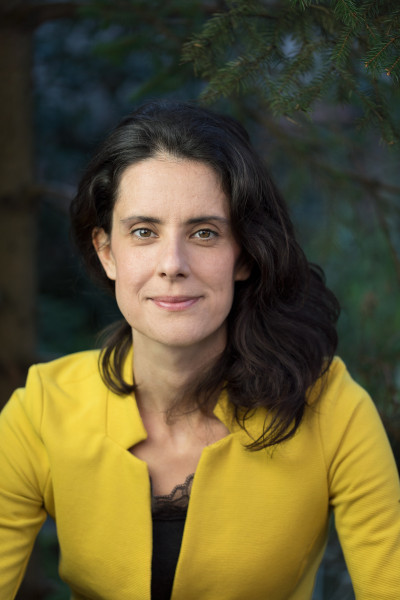
One of the most common motivations underlying our academic careers is an aspiration that we may be able to, at least in our own very small ways, make a difference. Whether we are attempting to build core foundation knowledge, expand new methods, or influence policy and people, we only hope that our findings, time, efforts, and passions may not be for waste. And yet, research by Dr Čulina and her team estimates that as much as 82-89% of our research output is wasted. Grappling with this shocking statistic we can only ask, how did science get to a place of such massive inefficiency, and what can we do to stop it?
For this month’s interview, I spoke with Dr. Antica Čulina, senior research associate in the Division for Marine and Environmental Research at the Ruđer Bošković Institute, Croatia. Antica is a specialist in informed decision-making, and in using systematic review, meta-analysis, and open science principles to improve research in ecology and evolutionary biology. She has published extensively across open science challenges, particularly in investigating the prevalence of and promoting data and code sharing, as well as co-founding SPI-Birds, a connected open database for bird research, and SORTEE.
Antica kindly joined me on July 13th, 2026, to discuss two of her recent publications on the topic of research waste: Quantifying research waste in ecology and Supporting study registration to reduce research waste.
This interview has been edited for length and clarity.
Q&A
What is research waste?
ECR: Before reading these papers, I hadn’t heard of research waste. What brought you into researching this topic?
AC: I was applying for a European Research Council grant to explore some ideas on how to improve research in ecology, but I found it difficult to justify my research proposal because there was so little published evidence to demonstrate that there is an inefficiency problem in the first place. I found a paper in medicine by Iain Chalmers and Paul Glasziou, Avoidable waste in the production and reporting of research evidence, where they estimated waste in medical research due to inefficiencies. Using a similar approach, I did a very quick and dirty calculation of research waste in ecology. Initially I intended this only to be used as support for the grant, but it has since become something bigger. I didn’t get the grant, but I kicked off a line of research I do now. This is actually a nice example of how small steps inside of larger projects — even if that final project “failed” — are, in the end, often not a waste after all.
ECR: What is and isn’t considered research waste?
AC: It’s difficult to define waste because there are multiple different approaches. If you take a philosophical perspective, you can ask ‘is it wasted for me if I learned something? Is it wasted for my research group if we learn from it?’ On the individual level, research effort is probably never wasted because you always learn something.
In our paper, however, we took the same approach as in the medical review so the estimates would be comparable. For these papers, we consider waste in terms of what the broader community (that is, other researchers, practitioners, public) can learn from the research. In this approach, research is considered wasted if the community can’t learn from it. This includes both unpublished research, and published research conducted or reported too poorly to be reliably used by others.
While what we calculated is avoidable waste, there is also unavoidable waste - this is waste we are not able to prevent, and is just a part of the process of learning. This might include trialling new technologies, or piloting new methods. Not all of these will work, but you need to trial them in order to know that, and to improve the approach. Avoidable waste is what we focus on in the paper, though. Avoidable waste is waste caused by flaws that could have been prevented with better planning. For example, if you undertake research with a method that doesn’t actually work, and that information was out there but you failed to conduct the literature search on the topic, then that mistake and redundancy was avoidable.
For our paper, we also came up with a further categorisation to core and exploitative waste. We define core waste as research that’s completely unseen to the broader scientific community. This is mainly work that is unpublished, either because there was something wrong with the study method, the researcher did not pursue publication, or because it was considered “uninteresting” and suffered from publication bias. Exploitative waste is research that has been published, but what we can learn from it is limited due to methodological errors or poor reporting. While core waste may be avoidable or unavoidable (since it includes things like pilot studies), exploitative waste is truly avoidable.
When trying to reduce waste, we need to reduce both core and exploitative waste, but exploitative waste is really the low-hanging fruit. For example, studies that cannot be incorporated into meta-analysis because of incomplete results reporting could easily be saved from waste if the journals ensured that results were reported in full before publishing. It would be easy to incorporate this kind of check into review, so, in terms of cost-benefit analysis, this is the most cost/beneficial change we could quickly make.
Causes and consequences
ECR: In your paper, you estimated 82-89% of conducted research is wasted. Why is this number so high?
AC: We don’t know yet. We don’t even know if that number really captures the scale of it, either. This number is an estimate, based on other available estimates, and it allows us to capture visible mistakes, but not the invisible ones. For example, several of the meta-studies we used to obtain our estimates looked at whether there had been proper randomisation. While they captured waste in terms of improper experimental randomisation, they do not capture questionable research practices. So, the true scale of waste might be even larger than what we estimated. However, it might also be smaller, because the meta-studies we used capture a fraction of the field.
What this number does tell us however, is that the system is broken. It asks two big questions. Firstly, why is so much research conducted by people who should know how to do research being conducted incorrectly? Secondly, how do studies with methodological issues get published? Peer review supposedly exists to capture these kinds of errors.
I think this volume of waste is caused by two main underlying factors: money and human cognitive biases. For-profit publishers earn insane amounts of money from the current system so they want you to publish. And — what a coincidence — there is this huge pressure to publish in academia, called “publish-or-perish”! So, instead of spending time to learn something properly and check everything, there is pressure to rush and just do it, and publish it as fast as possible. The second cause is that we are human. We have conscious and unconscious biases, and we make mistakes. The fact that our academic livelihood actually depends on writing papers means we are additionally under pressure to rush, more likely to engage in cognitive fallacies, and less likely to want to go back and correct those mistakes afterwards.
While the waste we estimated is very high, though, it matches with other estimates from other fields — for example, 85% in health research. Interestingly, I have learned that between 80–90% of business start-ups also fail. Maybe this rate of failure is just a feature of human enterprise. I don’t think that’s the full story though. I agree that maybe unavoidable waste will be inevitable (for example, during pilot projects, while checking and testing things), but the avoidable waste should not be so high. Either way, we should be doing our best to decrease it.
ECR: What do you think the consequence of such a high proportion of waste is?
AC: The consequences are many, but are very difficult to quantify. What bothers me, though, is that incorrect results are worse than waste. Waste means we cannot use the research, but an incorrect result means we can make wrong decisions based on it. You can imagine that in medicine an incorrect result can lead to decisions that have serious consequences for human health. Similarly, in ecology, we risk serious consequences for nature conservation. Non-published results or useless results (e.g. not properly reported) can also have these same consequences, preventing positive change. There is also a risk that, when these inefficiencies and errors are discovered, the already low confidence the general public puts in science could become even lower.
Strategies for reducing waste
ECR: Let’s say you’ve done a failed pilot project. Should we be making that available somehow so that other researchers can learn from our failures? Is the end goal of open science to make absolutely everything you did and tried available?
AC: It depends on whether those failures could be useful information to someone. If you think there is some potential for others to learn from it, there are specific places to publish that. For example, there is a World Archive of Scientific Trial & Error, as well as a platform called protocols.io, which gives researchers a place to publicise their failures.
A second important aspect to consider is that much of current open science policies prioritise availability, but there aren’t necessarily always systems in place to check the quality of available materials. For example, there is much open data in ecology these days, but I guarantee you only around 20-30% of that can truly be reused. Unless we’re doing open science properly, what we’re archiving can be not only useless, but also takes space and money to store.
ECR: In your paper, you promote the benefits of pre-registration for reducing waste. Could you briefly summarise the main benefits?
AC: Pre-registration is the process of thinking through, in detail, what you intend to do for your study. You can choose to make that information available to others, through peer-review via Registered Reports, or on an open platform like Open Science Framework Registries. You can also place your pre-registration behind an embargo until the research is completed if you’re worried about your ideas being sniped.
The benefit of pre-registration is that it gives you the chance to think through every aspect of your work before you start it, in a systematic way, preparing you better for what’s to come. In my experience, everything that I pre-registered ran so much smoother and, in the end, was much faster than when I did not pre-register. It’s especially useful for collaborative projects, to ensure everyone has the same understanding of the research project aims and methods.
ECR: In that same paper you mention that despite more journals becoming open to registered reports (that is, when a paper is accepted to a journal based on its preregistration, and will be published irrespective of the significance of the results), there have been very few of these actually published. Why are registered reports and pre-registration in general not more popular in ecology?
AC: There are many reasons why an individual might choose not to preregister. For example, when you register via registered reports, you have to wait for the review (which might take 2 months or more if it requires revisions) before you can begin gathering the data. That might be an issue for shorter-term projects. However, you can always pre-register independently without review, which would incur no delay.
Some also worry that pre-registration will lock them down, stifle creativity, and limit what they might discover. It’s important to remember that pre-registration is a plan, not a prison, though. Of course, you are allowed to change things. As long as you transparently report when and why you made these changes, this is fine and understandable. That’s how research works. It is a bit different with registered reports though. In this case, reviewers will judge whether you have deviated too much from the protocol.
In the psychology field, probably in response to the uncovering of psychology’s reproducibility crisis, registered reports have been embraced, and preregistration has become a norm. Presumably, once the ecology and evolutionary biology field becomes similarly aware of our own reproducibility crisis and challenges, there will be more interest in taking actions to mitigate waste. We are humans, though, and in the end, we will care most about impacts that directly affect us. We need to promote the personal benefits of pre-registration by hearing from people who have preregistered themselves. It’s good to collaborate with people who have preregistered before, to see how it actually works, and maybe it’s not as horrible as you imagined.