

By Oakleigh Wilson | October 29, 2026
‘ECR Asks’ is a series of Q&A sessions where I speak with experienced researchers to explore their journey in, and perspectives on, open science and transparent research. With the goal of supporting early career researchers like myself, this series aims to answer big questions and share practical insights on navigating the ever evolving landscape of open science and academia.
I would like to sincerely thank Dan for taking the time to express his perspective and passion for this complicated topic.
Background
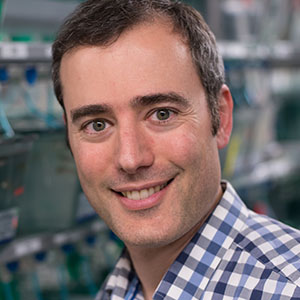
This month, I spoke with Dr Daniel Gorelick, Associate Professor with the Center for Precision Environmental Health at the Baylor College of Medicine, USA. Daniel’s primary research focuses on understanding the influence of environment chemicals on embryonic development but he is passionate about improving the efficiency and rigour of the peer review publication pipeline. He has served as the Editor in Chief of Biology Open for the past three years. His recent preprints, Fast & Fair peer review: a pilot study demonstrating feasibility of rapid, high-quality peer review in a biology journal as well as the updated case study Expanded implementation of Fast & Fair paid peer review reduces time to first decision without reducing review quality in a biology journal, exploring the results of paying reviewers for Biology Open.
‘Fast & Fair’ is a proposed model of reviewer payment launched by Daniel and colleague, Alejandra Clark, for Biology Open. The pilot began with a 6-month trial conducted July to December 2024 and was accepted as the primary review model from 1 April 2025, with all subsequent papers handled through this model. In this system, freelance reviewers from a pre-screened pool of possible reviewers were offered £220 in exchange for a high-quality peer review returned within 4 days of accepting the review report request. For the manuscripts handled through this model, the average time to first decision achieved for these papers was a mean of 5.5 days (compared to the conventional 37.7 day average). Assessment by academic editors checking the quality of each of the returned reviews confirmed no reduction in review quality despite this increased speed. Additionally, invitations to review were accepted more often than conventional un-paid invitations (67% versus 23%) and had a higher completion rate (98% versus 87%). Dan generously joined me on the 23rd of September, 2026, to discuss the preprints and address common criticisms of paid peer review.
This interview has been edited for length and clarity.
Q&A
The quality argument
ECR: What is the problem with peer review that the ‘Fast & Fair’ reviewer payment model was trying to solve?
DG: Fast & Fair was designed to solve several problems. We wanted to make it easier for editors to find reviewers willing and able to review manuscripts. We wanted to provide authors a decision, with reviews, more quickly, without compromising the quality of reviews. The problem with not paying reviewers is that you get what you pay for. At least in my system, the so-called “R1 universities” in the United States, we are not paid to do peer review. It is nowhere in our contract. It is not part of our metrics for hiring, annual evaluations, or promotion. I essentially have no incentive to do peer review, except out of the goodness of my heart, or a desire to pay it forward and try to be a good person. Rationally, what this means is that the times that I do accept doing a peer review report, I also don’t have an incentive to do a good job, or at least, not the best job I could do — other than whatever incentive is provided by my conscience, which will vary depending on the day, depending on my level of fatigue and distraction.
The current review system is choked up because it’s very hard to find reviewers who will say yes, and even harder to find reviewers who will actually complete the review to a high quality, in a reasonable amount of time. By providing payment in exchange for a quick and high-quality review, all we are doing is providing fair incentive. Decades of economic research has shown that when you tie performance to payment, you often get improved performance. I’m not sure why peer review would be any different. So far, we are finding that it’s working. The number of people we have to invite to get a successful review has gone down on average from 9 to 3, the completion rate is 98% for Fast and Fair paid versus 60-something percent for the conventional approach, and the review quality has been maintained. I would personally say that the quality has gone up, but we haven’t done the stats on that yet.
ECR: In the freelancer model, reviewers were paid £220 per high-quality review that was returned within the timeline. £220 is a lot of money to me, but it wouldn’t be to my professor. How was this value decided?
DG: The £220 value was chosen specifically to be a significant amount of money. I was pushing for it to be higher, but, in the end, this is what we could afford. I hypothesised that in order to motivate people to do a good job with these reviews we would need to offer them a meaningful amount of cash. The $15 or $20, bottle of wine, or APC discount, which have been offered in the past, wouldn’t cut it. The goal is to offer so much money that it presents a genuine incentive to prioritise doing the review, and doing a good job of it.
But yes, exactly. While £220 is enough money to motivate many people, it won’t be for everyone. We don’t have any Nobel Prize winners on the staff, because, honestly, if I won a Nobel Prize, I would be charging a lot more than £220 for my review.
ECR: How is the quality of the review decided?
DG: We grade all the reviews we receive and we only pay people if we deem it to have scored highly. In our case, if you don’t get a good grade on your review, you get an email from me or the managing editor, Dr. Alejandra Clark, saying, “look, you know, this review was okay, but here’s how it could have been improved. If we ask you to review again for us, we’re going to be looking for these improvements, right?” If the review is graded poorly, not only do we not pay the reviewer, but we don’t hire them again. I don’t know of any other journal that does that.
In our case, we already restrict our reviewer applicants and only seek reviews from those at least 5 years beyond their PhD because we find scientists with more experience give us better reviews. In my dream world, however, we don’t have to do this. Instead, we would have an application test that we would give every aspiring reviewer. We would provide them an unpublished manuscript for which there are no reviews, you review it, and then we have a gold standard review, which forms a kind of rubric, against which your review is scored. If you score above some threshold, we’d hire you, otherwise, you need more training. We don’t yet have the resources to do this, but it would actually allow us to be completely diverse and equitable. We wouldn’t need to know anything about our reviewers except how they performed on the trial review.
ECR: Payment aside, personally, knowing that my review was going to be graded feels like an incentive of its own to make sure I do an extra-thorough job of my reviews. I don’t know what a really great review looks like though…
DG: Peer review relies on scientists being able to identify research flaws and ask important questions about transparency and how the science has been represented. Yet, there’s no training for how to do this, nor really even any standard for what a high-quality peer review would look like. The current system relies on early career researchers learning from their mentors, and while I’m not maligning the mentors and I’m sure a lot of them are writing great reviews, ultimately, it’s not standardised. Where there are peer review courses — such as the one offered by Nature or the Howard Hughes Medical Institution — the advice is somewhat general: how to structure your review, how to be nice and substantive… What we lack is training that really drills down, like, “actually look at Figure 1 and tell us what’s wrong with it”.
A concrete peer review skills course for ECRs is something I’m working on developing with my colleagues Ariel Lyons-Warren and Evelin Young at Baylor College of Medicine. As part of this, we have generated a bank of preprints that we and some of our other colleagues have reviewed exhaustively. These will be used both for teaching purposes, but also serve as a rubric. You can test your skills by reviewing one of our pre-selected papers and then comparing your review to the “gold standard” we have produced.
I think we are the only people doing this. I’d love to be wrong though. If anyone is doing anything like this, I would love them to get in touch with me.
The fairness argument
ECR: A perspective I’ve heard before is that while paying peer reviewers may be a “marginal improvement on the existing system” (interview with Professor Alex Holcombe), that it would be better to just take money out of the equation entirely and have everything be free. What is your perspective there?
DG: Yeah, in my dream world, we wouldn’t need to pay reviewers because reviewing would be considered a genuine charitable contribution that we make to non-profit journals and scientific societies. In some specialities, so I’ve been told, this already exists. I’ve heard that in economics, all the “gatekeeper journals” (that is, the prestigious journals that people perceive they have to publish with in order to get a job or get promoted) are nonprofits run by societies, and so it makes sense to review for them for free. If we could set up the same system in every field, that would be great, and I’d be the first person to say, “awesome, we do not need payment”.
That isn’t what’s going on though. Many of the gatekeeper journals in my field, as with ecology and evolution, are for-profit enterprises and it makes no sense to conduct a review for free for them. These are multinational corporations who have tens of billions of dollars in revenue and double digit profit margins. If you care about social justice or workers rights or fair pay or anything like that, it makes no rational sense to volunteer for these companies to profit off your charity.
Sure, if you want to keep reviewing out of obligation or charity rather than for pay, that’s very admirable, and you can… just please, only review for journals that are rigorous, respectable, and nonprofit. Stop reviewing for free for for-profit journals. If we all stop, it will send a message that we’re not okay with it. We need to exert pressure on the system to create change.
Responding to common criticisms
ECR: For this section, I was just going to pose some of the common criticisms I have heard about paying peer reviewers, if that’s okay?
DG: Yes, sure, but I can summarise my answers to all your questions in the same way, which is: Most of the criticisms against paying peer reviewers are theoretical, and the empirical data that we have from our journal does not support these actually being problems. I don’t really know what else to say. It’s a little bit frustrating when people criticize us with these hypothetical challenges without looking at the actual data. Besides, if a problem does emerge, we will face it when we get there. We have really rigorous checks and balances in place so that we are never compromising, for example, rigor for speed. If we notice something going wrong and our review qualities drop, we will recalibrate.
ECR: In the paper you mention “motivation crowding” as a psychological phenomenon where external incentives undermine the intrinsic motivation for a task. It has been said that by paying peer reviewers, the intrinsic drive to review as a reciprocal part of the scientific process might be muddied. Do you see any evidence of this?
DG: The whole motivation crowding argument appears to me like people trying to co-opt economic jargon to try to denigrate paying peer reviewers.
Motivational crowding as an idea goes back to blood donations from England, where wealthy people donated blood for free because they felt like it was a societal requirement, but when the clinics introduced payment for the blood, they noticed that wealthy people stopped donating. The upper crust people basically felt that they didn’t want to donate blood for money, they only wanted to donate if it was for the “greater good”. Because the only people then willing to donate blood were those from the lower socio-economic strata, to take a quite classist view, the quality of the donated blood was then seen to have declined.
If the same thing was happening in peer review, then our Fast and Fair approach would have been a miserable failure. All these people who were previously reviewing for free would have stopped, and the people replacing them would have turned in crappy reviews. But that’s simply not what happened. Review quality did not decrease, while turnaround time dropped dramatically.
That being said, perhaps for different journals, or for different fields, or even as we scale up, it could be that the review quality starts to go down. Nobody wants that, of course. That’s why we have checks and balances to ensure review quality is maintained.
ECR: Where will the money for these payments come from? Your paper mentions “one potential approach to covering reviewer payments is to increase article processing charges to authors” but this may not be a welcome suggestion when high APCs are a contentious problem in academia already. This reluctance to pass cost onto the authors appeared to be one of the motivations behind the non-monetary “Review by reciprocity” system proposed by Professor Angela Moles and colleagues (2026) (earlier ECR Asks interview). Do you have a response to this concern?
DG: The better question is, where does the money come from now? Right now, it comes from funders and universities. Why would that be any different when paying for peer reviewers? My publisher, The Company of Biologists, is increasing the APC from $2,500 to $2,900, in part to offset the charge for paying peer reviewers. We’ll see if that 16% increase changes submissions.
There are, of course, also alternatives to increasing the APCs. Perhaps the for-profit publishers will reduce their profit margins a little to be able to pay for peer review? The nonprofit journals can pay their employees a little less, or reduce expenditure on other community programs like early career awards, or conference sponsorship. Alternatively, those smaller journals can advocate themselves to the funding bodies and request funds to pay peer reviewers. I don’t really see this as an insurmountable problem.
The bigger problem is that the review system is choked up and I don’t necessarily think that the APC affects how people review. I would be interested to see whether the Diamond Open Access journals (free to publish and read) are having just as much difficulty finding reviewers as other journals. I suspect that they are.
ECR: Once we start paying for reviews, are we opening the floodgates for price competition? Are we going to see a skew where large, rich, or for-profit journals can monopolise reviewers while small journals who can’t afford as high of a payment have an even harder time recruiting reviewers?
DG: I would say that cat’s already out of the bag. The gatekeeper journals aren’t struggling to attract reviewers. Sure, those journals may still have issues with quality reviews, but ultimately, everyone wants to review for Science or Nature.
What would be interesting is seeing how the gatekeeper journals play off against each other. In most fields, Nature and Science are considered equivalently prestigious but Nature is for-profit whereas Science is published by the American Association for the Advancement of Science, which is a nonprofit. If Science started paying peer reviewers, and in exchange for that, provided authors with higher-quality reviews with a guaranteed turn-around in — let’s say — 2 weeks, would that take submissions away from Nature? I would love to see the results of that experiment.