Member-Voices

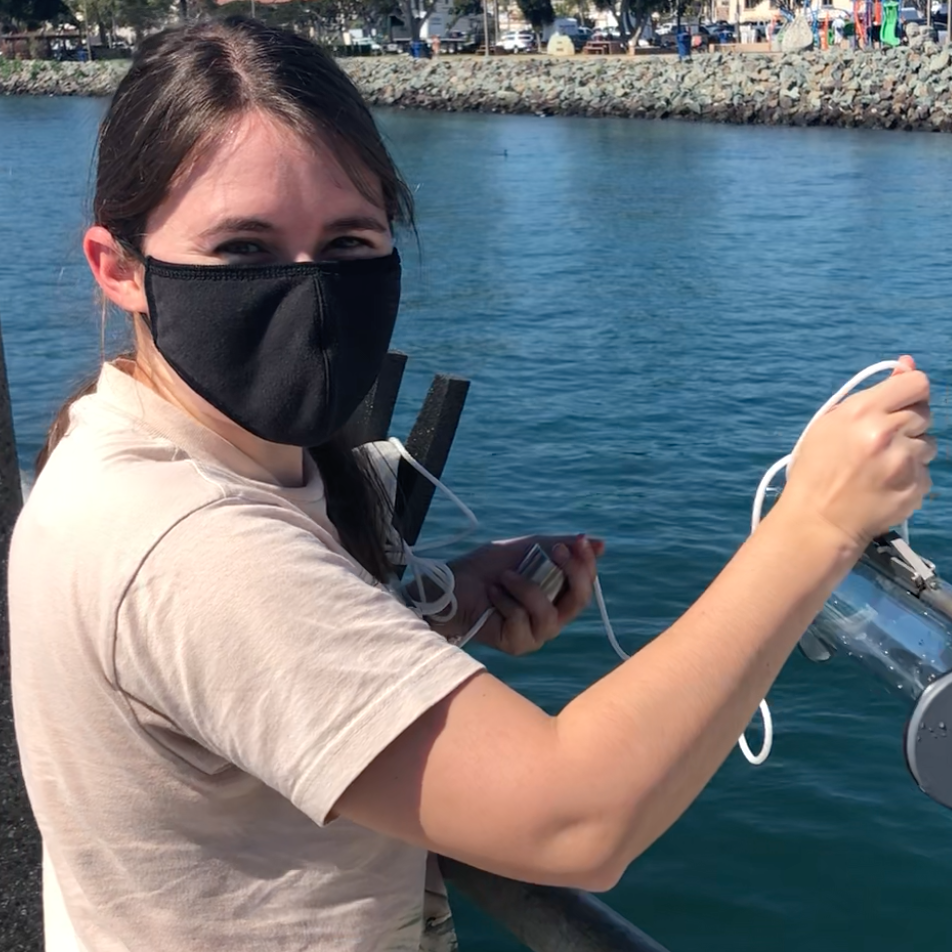
SORTEE member voices – Signe White

[SORTEE member voices is a weekly Q&A with a different SORTEE member]
   

Name: Signe White.
 

Date: 12 July 2021.
 

Position: Postdoctoral Researcher.
 

Research and/or work interests: My postdoctoral current work focuses on the beneficial effects of microbiomes of marine diatoms on adaptation to increasing ocean temperatures. My former work in graduate school was on how parasites evolved in response to host genetic heterogeneity. I’m also interested in biogeography and coevolution..
   

Continue reading

SORTEE member voices - Szymon Drobniak

[SORTEE member voices is a weekly Q&A with a different SORTEE member]
   

Name: Szymon Drobniak.
 

Date: 11 July 2021.
 

Position: Lecturer.
 

Research and/or work interests: Evolution and biostatistics.
   

If you had the power to change one thing about current research practices in your field, what would it be?
Less reliability on classical null hypothesis testing.    

Tell us about one of your hobbies.
I collect chemical elements.
   

Where to find you online?:
Szymekdrobniak.WordPress.com

Continue reading

SORTEE member voices – Victoria Hemming

[SORTEE member voices is a weekly Q&A with a different SORTEE member]
   

Name: Victoria Hemming.
 

Date: 10 July 2021.
 

Position: Postdoctoral Research Fellow.
 

Research and/or work interests: Conservation; Ecology; Decision Science; Risk Analysis.
   

If you could recommend one paper to the community of ecologists and evolutionary biologists on an openness / reliability / transparency topic, what paper would you choose?
I would recommend the paper by Fraser et al. 2018 “Questionable Research Practices in Ecology and Evolution”. It gives a really great overview of the concepts related to Openness, Reproducibility and Transparency in Ecological domains and an indication of the extent to which the practices were upheld (or not).    

Continue reading

SORTEE member voices – Daniel Hoops

[SORTEE member voices is a weekly Q&A with a different SORTEE member]
   

Name: Daniel Hoops.
 

Date: 10 July 2021.
 

Position: Postdoc.
 

Research and/or work interests: Evolution; Neuroscience.
   

What is an open / reliable / transparent science practice that you admire but have not yet adopted in your own work?
Publishing my code (at all) and my data (in a way that is easy to understand and use). This is so much work, and that work has to be done after you have finished the project. By that point I am just so tired of it and want to move on to new and exciting things. There are few incentives for me to keep working on a project that is already submittable, and numerous incentives for me to move on to a new project and get it to the point where it can be submitted.    

Continue reading

SORTEE member voices – Marko Bracic

[SORTEE member voices is a weekly Q&A with a different SORTEE member]
   

Name: Marko Bračić.
 

Date: 10 July 2021.
 

Position: PhD student.
 

Research and/or work interests: Behavioural biology, decision-making, individual differences, cognition, evolution, nature conservation, better science.
   

What ‘ORT’ practice have you introduced into your research practice that you’ve found really helpful?
Sharing data and code; version control.    

What’s an ‘ORT’ subject or practice that you think deserves more attention?
Version control.    

Continue reading

SORTEE member voices – Lauren White

[SORTEE member voices is a weekly Q&A with a different SORTEE member]
   

Name: Dr Lauren C White.
 

Date: 10 July 2021.
 

Position: Post-doctoral researcher.
 

Research and/or work interests: My work primarily uses genetic data gathered from wild animal populations to address fundamental questions on how natural selection shapes life and practical questions of how we can conserve it. My most recent project focuses on chimpanzee kinship dynamics and uses genomic data to estimate pairwise relatedness across an entire community of wild chimpanzees. This dataset allows me to examine age-specific changes in local relatedness in chimpanzees, which has implications for the evolution of menopause and inbreeding avoidance. I also work closely with conservation practitioners to answer questions that guide management of threatened species. This work has ranged from improving the genetic fingerprinting methods used to monitor population size of the northern hairy-nosed wombat, to assessing genetic diversity to guide gene-swaps and reintroductions of numerous species such as the greater stick-nest rat. Finally, my research also frequently involves methods development, as I often make use of sub-optimal genetic samples (ancient DNA, museum specimens, feces, hair and feathers), which are usually easier and more ethical to collect, but which require unique analytical treatments.
   

Continue reading